Before the First Freeze: 5 Winter Prep Checks for Drivers in Pauls Valley
The first freeze may still be a few weeks away, but October is the right time to prepare your vehicle. A sudden cold morning can expose a weak battery, low tire pressure, poor visibility, or a cooling system that is not ready for the temperature change.
A few simple checks now can help you avoid an inconvenient breakdown later. This winter-prep checklist covers five areas that deserve attention before colder weather arrives in Pauls Valley, Oklahoma.
1. Check tire pressure and tread condition
Cold air causes tire pressure to drop. As a general rule, tires can lose about 1 PSI for every 10-degree drop in temperature. Even a modest change can affect handling, braking, fuel economy, and tire wear.
Check your tire pressure when the tires are cold, preferably before driving. Use the pressure listed on the driver’s doorjamb label or in the owner’s manual, not the maximum pressure printed on the tire sidewall.
While checking pressure, inspect each tire for:
- Low or uneven tread
- Cracks, cuts, or bulges in the sidewall
- Nails or other objects lodged in the tread
- Uneven wear across the tire
- Frequent pressure loss
Do not forget the spare tire. A spare that has been sitting unused for months may also be underinflated or too old to use safely.
Tread depth matters even more when roads are wet, icy, or slippery. If your tires are worn or showing damage, schedule a professional inspection before winter driving becomes more demanding. MNS Auto & Tire provides tire sales and service in Pauls Valley, including tire inspections, mounting, balancing, and rotation.
2. Test the coolant and antifreeze protection
Your vehicle’s cooling system works throughout the year, but the coolant mixture becomes especially important when temperatures fall. Coolant, also called antifreeze, helps protect the engine from freezing and helps regulate engine temperature.
Before the first freeze, check the coolant reservoir when the engine is completely cool. The fluid should be between the marked level lines and should appear clean. Do not open a radiator cap while the engine is hot; pressurized coolant can cause serious burns.
A visual check is helpful, but it cannot confirm whether the coolant has enough freeze protection. A technician can test the coolant strength and check for:
- Leaks around the radiator, hoses, water pump, or reservoir
- Cracked or swollen hoses
- Rust or contamination in the coolant
- An overdue coolant replacement
- Cooling system pressure concerns
Using the wrong coolant or mixing incompatible products can create additional problems. If you are unsure which coolant your vehicle requires, check the owner’s manual or ask a technician before adding anything.
MNS Auto & Tire’s diagnostic and inspection services can help identify cooling system concerns before they become a roadside problem.
3. Inspect the wipers, washer fluid, and defrosters
Winter visibility depends on more than headlights. Rain, frost, road spray, and freezing precipitation can quickly make a windshield difficult to see through. Worn wiper blades may leave streaks or skip across the glass exactly when you need them most.
Replace wiper blades if they:
- Leave heavy streaks
- Make chattering or squeaking noises
- Split, crack, or pull away from the windshield
- Miss sections of glass
- Have trouble clearing heavier rain
Top off the washer fluid reservoir with a quality fluid designed for colder weather. Plain water can freeze inside the reservoir, lines, or spray nozzles. Winter washer fluid is formulated to help prevent freezing and may include cleaning agents that improve visibility.
Test the front and rear washers, if equipped, along with every wiper speed. Also check that the front and rear defrosters work properly. A defroster that takes too long to clear the glass may indicate an electrical, blower, climate-control, or heating-system issue.
These checks are simple, but they make a major difference during an early morning drive in Pauls Valley.
4. Have the battery and charging system tested
Cold temperatures make starting the engine more demanding. At the same time, a weak battery has less available power when temperatures fall. A battery that starts the vehicle normally in October may struggle or fail during the first genuinely cold morning.
Battery testing is more useful than checking voltage alone. A proper test can evaluate the battery’s starting capacity and help determine whether it is nearing the end of its service life. The charging system should also be checked to confirm that the alternator is replenishing the battery as it should.
Look for warning signs such as:
- Slow or hesitant engine cranking
- Dim headlights or interior lights
- A battery warning light
- Corrosion around the terminals
- Repeated jump-starts
- Electrical accessories behaving unpredictably
Battery terminals should be clean and secure, and the battery hold-down should keep the battery firmly in place. Excess vibration can shorten battery life and damage connections.
If testing shows that the battery is weak, replacing it before a freeze is usually more convenient than waiting for a no-start situation. MNS Auto & Tire offers battery testing and replacement services for all makes and models, along with charging-system checks and no-start diagnostics.
5. Inspect the brakes before winter driving
Your brakes need to work consistently in every season, but winter conditions leave less room for error. Wet or slick roads can increase stopping distance, and any existing brake problem may become more noticeable when traction is reduced.
Have the braking system inspected if you notice:
- Squealing, scraping, or grinding
- A soft or sinking brake pedal
- Vibration or pulsation when braking
- Pulling to one side
- A brake or ABS warning light
- Reduced stopping performance
- Brake fluid that is low or leaking
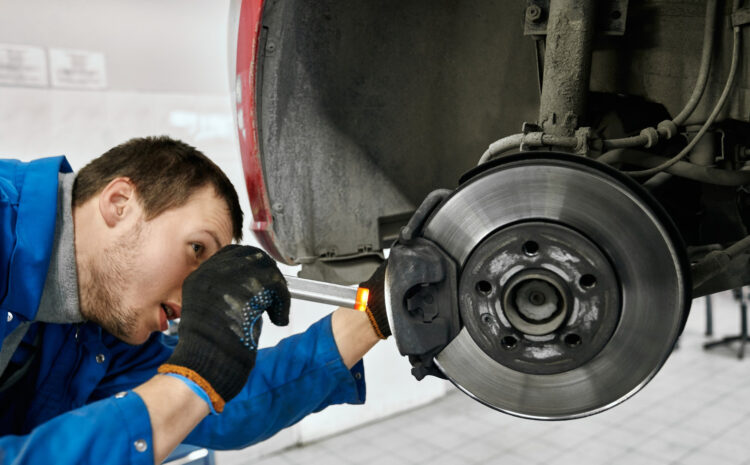
A complete inspection may include the brake pads, rotors, calipers, brake lines, hoses, fluid, and ABS components. Brake wear is not always easy to judge from the driver’s seat, so an inspection can reveal issues before they become more expensive or unsafe.
If you are searching for brake repair in Pauls Valley, MNS Auto & Tire can inspect the system and explain what needs attention. Digital and visual inspections help you see the condition of the vehicle, while upfront pricing helps you understand the repair before work begins.
Make winter preparation easier with one inspection
Checking five separate systems at home can be time-consuming, and some problems require professional testing. A seasonal inspection can combine tire pressure and tread checks, coolant testing, wiper and washer checks, battery testing, and brake inspection in one visit.
MNS Auto & Tire provides comprehensive vehicle maintenance services at 37164 OK-19, Pauls Valley, OK 73075. With more than 20 years of experience, certified mechanics, transparent pricing, and digital inspections, the team can help you understand what your vehicle needs before colder weather arrives.
For convenience, MNS Auto & Tire also offers a comfortable waiting room, free Wi-Fi, local shuttle service, loaner vehicles, and after-hours drop-off. Flexible financing through Wisetack may also be available for qualifying repairs.
Preparing before the first freeze is a small investment in safer, more dependable driving. Schedule your winter inspection with MNS Auto & Tire or book an appointment online before the temperature drops.