Brake Pads vs. Rotors: Which One Is Actually Wearing Out First?
If your brakes squeal, pulse, or feel different under your foot, it’s natural to wonder: are the pads worn out, or are the rotors the problem? The short answer is that brake pads usually wear out first. They’re designed to provide the friction that slows your vehicle, while rotors are sturdier metal discs that the pads clamp onto.
But “usually” isn’t a diagnosis. Pads and rotors wear at different rates depending on the vehicle, parts, driving habits, and condition of the brake system. Knowing what each component does, and what a proper inspection looks for, can help you understand whether you need pads, rotors, or both. For drivers looking for brake repair in Pauls Valley, that distinction matters: replacing a part that still has useful life isn’t necessary, but overlooking a worn or damaged component can cost more later.
Why brake pads usually wear out first
When you press the brake pedal, the caliper squeezes the pads against the rotor. That friction slows the wheel and creates heat. The pad’s friction material gradually wears away as it does its job, so it’s commonly the first part of the pair to need replacement.
Rotors wear too. Each time the pads contact them, the rotor’s surface experiences friction and heat. Over time, it can become thinner or develop damage that affects braking. A rotor may last through more than one set of pads, but there is no single lifespan that applies to every car.
Frequent hard stops, heavy loads, stop-and-go driving, corrosion, and a brake caliper that doesn’t move freely can all affect wear. Even the inner and outer pads on the same wheel may wear differently. That’s why mileage or a quick look through the wheel isn’t enough to confirm what needs service.
Clues that the pads may be wearing down
Some vehicles have a wear indicator that creates a squeal or chirp as the pad material gets low. Other common clues include a change in braking feel or a brake warning light. These signs call for an inspection, but they don’t identify the cause on their own.
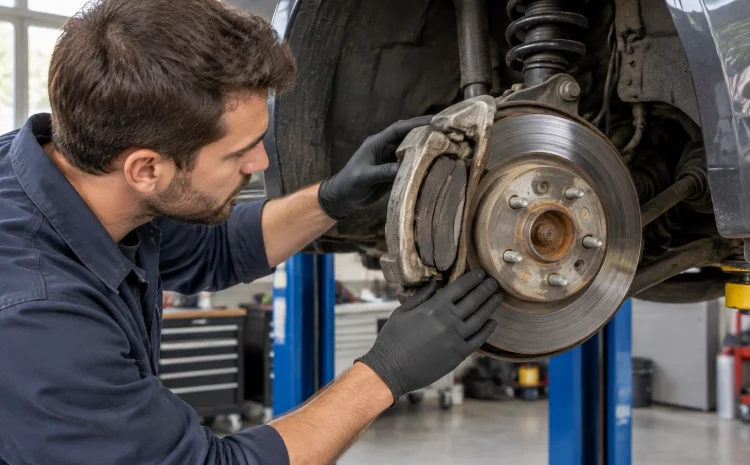
A technician checks the friction material, not the metal backing plate, and compares its thickness with the vehicle’s service guidance. It’s also important to inspect the inner and outer pads on both wheels of the axle. One pad that’s much thinner than its counterpart can point to a mechanical issue that needs attention, not simply a set of pads that has reached the end of its life.
A faint noise doesn’t always mean a brake part is worn out, and the absence of noise doesn’t guarantee the pads are in good shape. If you hear grinding, treat it as urgent: the friction material may be gone, allowing metal to contact the rotor. Avoid driving the vehicle and arrange for a safe inspection.
What points to rotor wear or damage?
Rotors don’t have a reliable “sound” that tells you their condition. A mechanic checks their braking surfaces for issues such as deep scoring, cracks, heat damage, or significant corrosion. The rotor’s thickness must also be measured and compared with the minimum specified for that particular vehicle and rotor. A rotor can look acceptable from the outside and still be too thin to reuse.
A pulse through the brake pedal or steering wheel when braking can be a clue that the rotor surface or thickness is uneven. However, vibration isn’t proof that a rotor is the cause; other brake, tire, or wheel concerns can produce similar symptoms. The inspection needs to confirm what’s happening before parts are recommended.

How a proper inspection separates the two
A useful brake inspection does more than label a noise as “pads” or a vibration as “rotors.” It looks at the parts together and checks whether the brake system is operating properly.
That means examining the pads for thickness and uneven wear, looking closely at the rotor faces, and measuring rotor thickness against the manufacturer’s limit. If the vehicle has a braking vibration, the technician may also need to check rotor runout and related components. The findings matter: a rotor with adequate thickness and a serviceable surface may be reusable, while one that’s cracked, badly damaged, or below its limit needs replacement.
When you’re reviewing a recommendation, ask what was measured and what condition was found. A clear explanation should connect the proposed repair to the inspection, not just to the sound or sensation you noticed.
Why replacing only the pads can be a false economy
Pad-only replacement can be appropriate when the rotors meet the vehicle’s specifications and are in serviceable condition. But installing fresh pads on a rotor that is too thin, badly scored, cracked, or otherwise unsuitable can lead to poor contact and braking concerns. New pads don’t restore a damaged rotor’s surface or make an undersized rotor safe to reuse.
The reverse is also worth considering: a rotor replacement doesn’t solve the problem if uneven pad wear is being caused by another issue in the brake system. If that cause remains, the replacement parts may wear improperly too.
Brake work is generally assessed and completed for both sides of the same axle, so braking stays balanced from side to side. The right plan depends on the vehicle and inspection results, not on an automatic rule to replace every rotor or to keep every rotor.
When a mechanic should check the brakes
Schedule an inspection if you notice persistent squealing, grinding, a pulsing pedal, vibration when braking, a warning light, pulling to one side, or a change in stopping performance. If the brakes grind or the pedal feels unsafe, don’t keep driving simply to see whether the symptom goes away.
A mechanic in Pauls Valley, OK can assess the pads, rotors, and related brake components before recommending work. If vibration continues when you’re not braking, tires or suspension components may also deserve attention; a brake inspection can help clarify whether another system should be checked.
At MNS Auto & Tire, certified mechanics use visual and digital inspections so you can see what’s going on with your vehicle. The team has 20 years of experience and provides upfront pricing before repairs. You can learn more about the shop’s brake and suspension services.
The bottom line
Brake pads usually wear out before rotors, but the condition of both parts determines what your vehicle actually needs. A measured inspection, not a guess based on noise or mileage, can help you avoid both unnecessary replacement and a false economy.
If you’re noticing a change in braking, schedule an inspection with MNS Auto & Tire at 37164 OK-19, Pauls Valley, OK 73075. Request an appointment to find out whether the pads, rotors, or another component need attention.